
Toolbox Organization 101: How to Set Up Your Tool Chest Like a Professional
Posted by Elitetoolboxes.com on Jun 14th 2026
If you've ever spent ten minutes searching for a 10mm socket, you already understand why toolbox organization matters. Whether you're a professional technician, serious DIY enthusiast, or weekend garage warrior, an organized tool chest saves time, improves efficiency, and protects your investment.
The best mechanics aren't necessarily the fastest because they work harder—they work smarter. A well-organized toolbox allows them to find the right tool instantly, complete jobs faster, and maintain a cleaner, safer workspace.
In this guide, we'll show you how to organize your toolbox like a professional.
Start by Emptying Everything
The first step is often the most painful: remove every tool from your toolbox.
This gives you the opportunity to:
- Clean out drawers
- Remove broken or duplicate tools
- Identify missing tools
- Reorganize based on how you actually work
Many technicians discover they own multiple copies of tools they rarely use while their most-used tools are scattered throughout the box.
Group Tools by Category
Professional mechanics typically organize tools into dedicated zones.
Common categories include:
Socket Sets
Store sockets together by drive size:
- 1/4" Drive
- 3/8" Drive
- 1/2" Drive
Within each group, arrange them by size from smallest to largest.
Ratchets & Extensions
Keep ratchets, breaker bars, extensions, and universal joints together in a dedicated drawer for quick access.
Wrenches
Organize combination wrenches by size and type:
- SAE
- Metric
- Ratcheting
- Specialty
Wrench organizers can significantly reduce drawer clutter.
Screwdrivers
Separate:
- Phillips
- Flathead
- Torx
- Precision drivers
Many technicians arrange screwdrivers by length for faster identification.
Pliers & Cutting Tools
Store:
- Needle nose pliers
- Slip-joint pliers
- Channel locks
- Side cutters
- Wire strippers
Keeping similar tools together improves workflow during repairs.
Prioritize Your Most Used Tools
The top drawers should contain the tools you reach for every day.
Think about the tools you use on nearly every project:
- Ratchets
- Sockets
- Screwdrivers
- Pliers
- Tape measures
Less frequently used tools can be placed in lower drawers.
A good rule is:
The more often you use it, the easier it should be to reach.
Use Drawer Liners and Foam Organizers
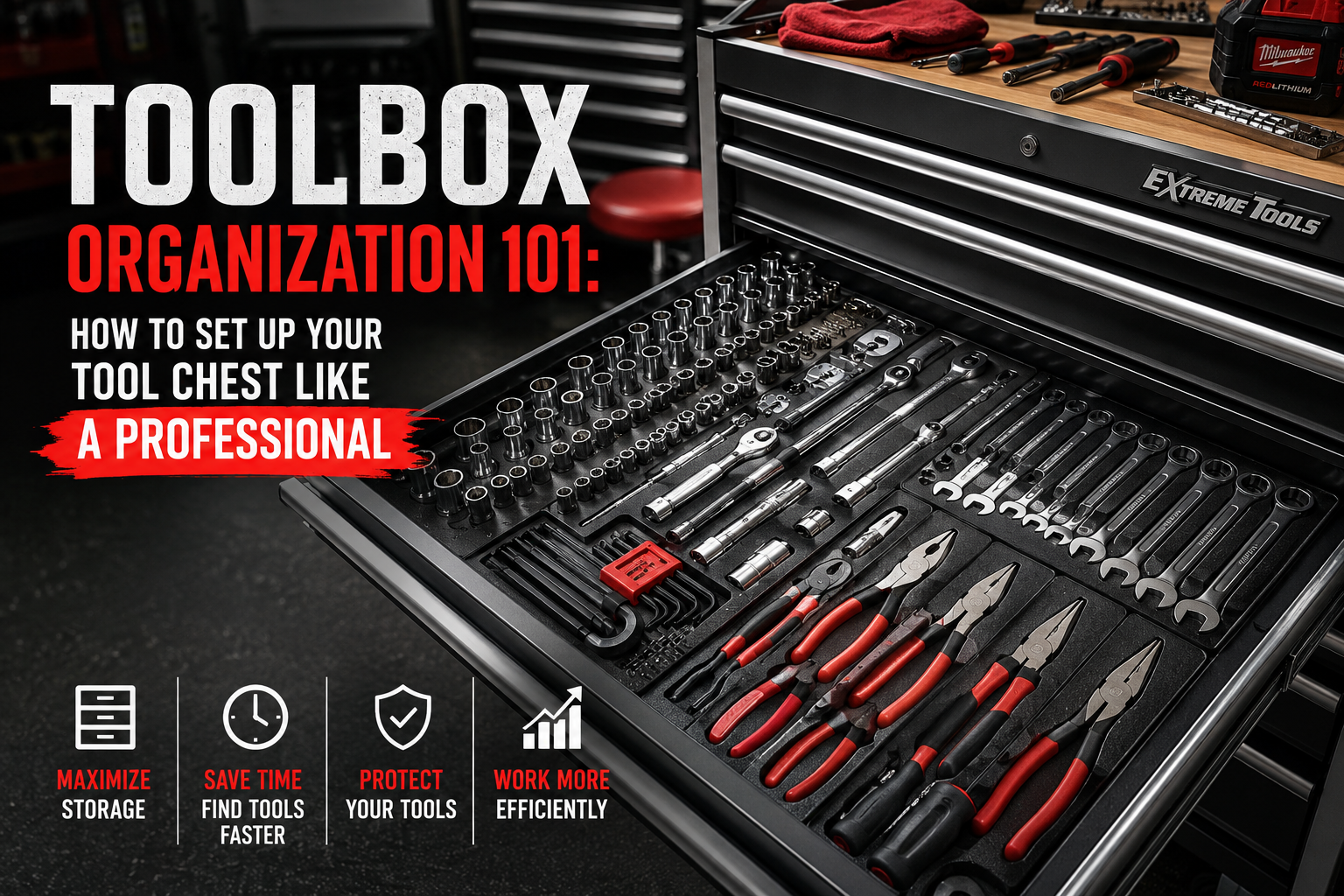
Professional toolboxes often use foam organizers or drawer liners to keep tools from sliding around.
Benefits include:
- Preventing scratches and wear
- Reducing drawer noise
- Faster visual inventory
- Easier identification of missing tools
Shadow foam systems take organization a step further by creating custom cutouts for every tool.
Label Everything
Labels may seem unnecessary at first, but they're one of the biggest time-savers.
Consider labeling:
- Drawer fronts
- Socket rails
- Parts bins
- Specialty tool compartments
When every item has a designated location, it's easier to maintain organization long-term.
Create a Dedicated Power Tool Area
Cordless tools continue to grow in popularity, which means they need their own storage space.
Reserve a larger drawer or cabinet section for:
- Impact drivers
- Drills
- Batteries
- Chargers
- Specialty cordless tools
Keeping power tools together reduces clutter and prevents damage.
Store Small Parts Separately
One of the biggest mistakes people make is mixing hardware with hand tools.
Use organizers for:
- Nuts
- Bolts
- Screws
- Washers
- Electrical connectors
- Clips and fasteners
Separate storage prevents drawers from becoming disorganized and makes parts easier to locate.
Leave Room to Grow
Most tool collections continue expanding over time.
When organizing your toolbox:
- Leave extra space in key drawers
- Reserve unused compartments
- Plan for future specialty tools
A toolbox that is already packed to capacity today will become frustrating tomorrow.
Invest in the Right Tool Chest
Organization becomes much easier when you have enough storage capacity.
Premium tool chests offer:
- Deeper drawers
- Higher weight capacities
- Better drawer slides
- More efficient layouts
- Enhanced security
For professionals and serious DIYers, upgrading to a larger toolbox often provides immediate productivity benefits.
Final Thoughts
An organized toolbox isn't just about appearance—it's about efficiency. Every minute spent searching for a tool is time taken away from the job at hand.
By grouping tools logically, prioritizing frequently used items, utilizing organizers, and investing in quality storage, you can create a professional-grade setup that makes every project easier.
Whether you're outfitting a home garage or a commercial shop, the right organization system starts with the right toolbox.